Carpenter Bees in Essex County, NJ: Damage, Prevention & Removal
March 10, 2026 — By Essex County Pest Control
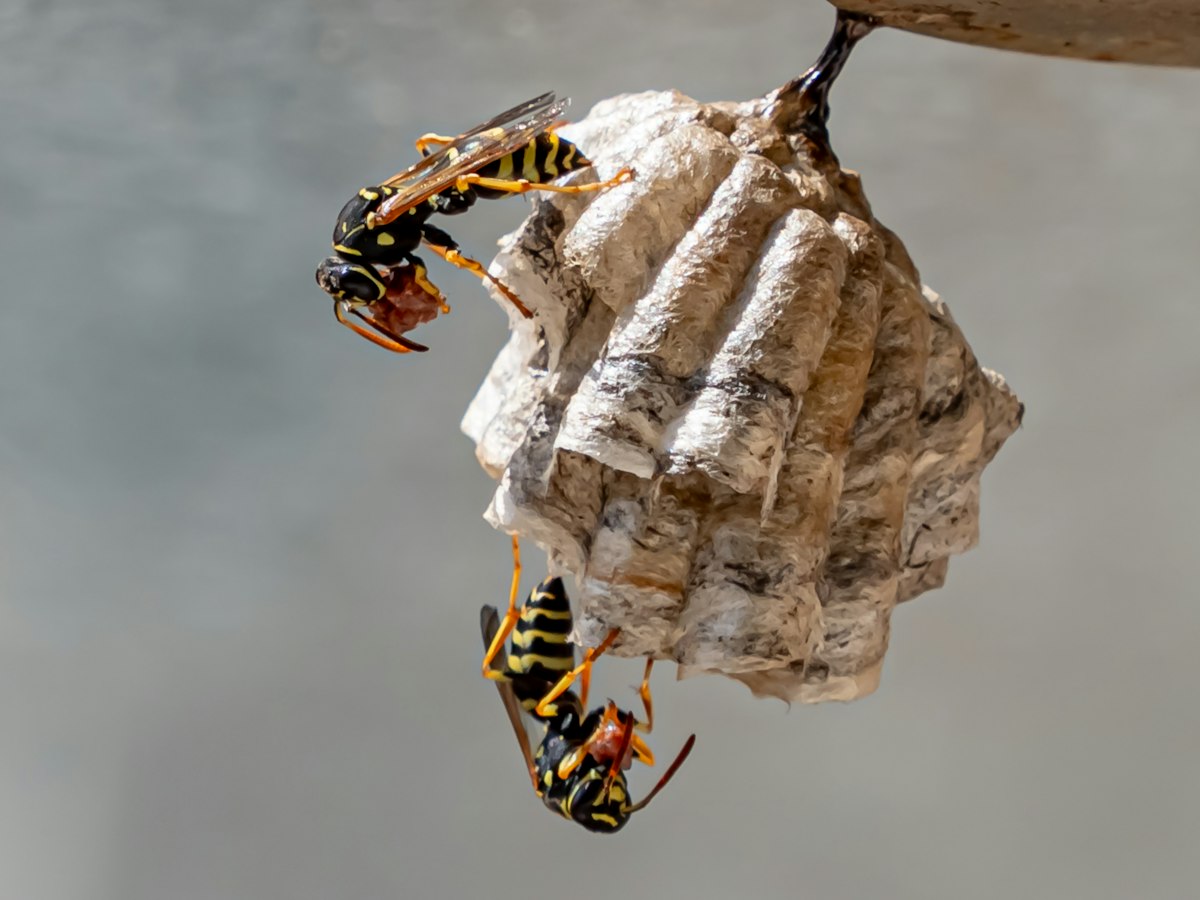
Carpenter bees are drilling holes in your deck, fascia, or siding? Learn how to identify, prevent, and remove carpenter bees from your Essex County home.
If you have noticed perfect, round holes drilled into the fascia, deck rails, pergola, or siding of your Essex County home — carpenter bees are almost certainly the cause. Every spring, these large bees emerge and begin boring new galleries into unfinished wood, causing cosmetic damage that compounds year over year.
What Are Carpenter Bees?
Eastern carpenter bees are among the largest bees native to New Jersey. They closely resemble bumblebees but can be distinguished by their shiny, hairless black abdomen (bumblebees have a fuzzy yellow abdomen).
Carpenter bees are solitary — unlike honeybees or yellow jackets, they do not form colonies. Each female drills her own gallery and raises her own young. However, they are highly site-loyal: the same wood, the same locations, year after year. This is why carpenter bee damage compounds over time.
The Damage They Cause
Carpenter bee damage appears as perfectly circular holes, approximately 1/2 inch in diameter, typically drilled in unpainted or unfinished wood. The entry hole goes straight in about an inch, then turns 90 degrees to run with the grain of the wood.
- Direct structural damage from a single year is usually cosmetic. However:
- Year after year of gallery extension weakens the wood
- Woodpeckers are attracted to carpenter bee galleries and aggressively tear apart infested wood to reach larvae, causing far more damage than the bees themselves
- Water infiltration into gallery openings causes rot over time
- Popular locations can have dozens of galleries after several seasons, significantly weakening boards
When Are Carpenter Bees Active in Essex County?
- - April through May: Adults emerge from overwintering galleries, males display territorially (though they cannot sting)
- May through June: Mating and new gallery drilling
- June through July: Larvae developing inside galleries
- August through September: New adults emerge, feed, and return to overwinter
The most effective treatment window is March through May — before or as activity begins.
Why Male Carpenter Bees Do Not Sting
The large, hovering bees that dive-bomb your head near the porch are almost always males — and males cannot sting. They are defending territory, not a nest. Female carpenter bees can sting but are quite docile and rarely do unless directly handled.
Prevention: Making Wood Less Attractive
Carpenter bees strongly prefer unfinished, unpainted, or weathered softwood.
Paint or stain all exterior wood. Painted surfaces are significantly less attractive to carpenter bees. Fascia, window trim, deck rails, pergola posts, and decorative wood should be kept well-painted or stained.
Use hardwoods where possible. Carpenter bees prefer softwoods like pine, cedar, and redwood. Hardwoods and pressure-treated lumber are much less commonly drilled.
Seal existing galleries in fall. After activity ceases in fall, fill galleries with steel wool and caulk or wood filler. This prevents reuse the following spring.
Professional Treatment
Essex County Pest Control treats active carpenter bee infestations with professional-grade residual dust applied directly into the gallery openings. The dust penetrates deep into the gallery, killing any developing larvae and adults that contact it. Treated galleries are sealed after the treatment period to prevent reuse.
Contact [Essex County Pest Control](/contact) for carpenter bee treatment throughout Essex County, NJ. April is the ideal treatment window.
Frequently Asked Questions
Are carpenter bees destroying my wood?
Year-over-year, yes. Single-season damage is primarily cosmetic, but carpenter bees return to the same locations annually, extending galleries and drilling new ones. Woodpecker activity in infested wood typically causes more damage than the bees themselves.
How do I get rid of carpenter bees in NJ?
Professional dust treatment applied to gallery openings is the most effective approach. Residual dusts penetrate the gallery to kill occupants and remain active for weeks. Sealing galleries after treatment prevents reuse. Preventive painting of all bare wood significantly reduces future activity.
Do carpenter bees sting?
Female carpenter bees can sting but rarely do unless directly handled. The large bees that aggressively hover near decks and porches are almost always males, which cannot sting at all.
When is the best time to treat carpenter bees?
March through May, as soon as you notice activity, is the ideal treatment window. Fall is a good time to seal existing galleries with caulk or wood filler to prevent overwintering and spring reuse.
Why do carpenter bees keep coming back to the same spots?
Carpenter bees are highly site-loyal. Adults emerge from their birth galleries, and new females often drill adjacent to or extend existing galleries. Treatment combined with gallery sealing breaks this cycle.
Need Professional Pest Control in Essex County?
Essex County Pest Control serves all 22 municipalities of Essex County, NJ. Same-day service available.
Get Same-Day Service
Licensed & insured pest control throughout Essex County, NJ.
Book Now(973) 721-6704